On what photography can teach us about slowing down and walking our own path
There is a particular kind of exhaustion that has nothing to do with being tired.
It is the exhaustion of too many options. Too many voices telling you who to be, what to buy, which path to take.
This is a story about four photographs I took in May. Not particularly remarkable pictures. But each one telling me something to me about how I choose — and how easily we stop choosing, and just drift.
The woman reading under the yellow tree
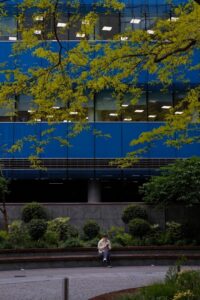
It was already five in the afternoon near Liverpool Street station in London. The offices had emptied and the streets were full of people hurrying home, that particular urgency of a Tuesday evening in a city. I had been walking all day and was tired. The last thing I wanted was to be swept into that current.
But I decided to let myself go with it anyway.
That stream led me to a quiet pocket between office buildings. A tree with yellow leaves, unusual for spring. And a woman sitting alone, reading a book. Completely still inside all that motion.
Looking at the photograph now, I notice something uncomfortable. Street photography, the way I had practiced it for years, often works like this: we move in stealth mode, we take an image, and the person becomes a prop in our composition without ever knowing it. We are kind of ghosts, extracting something.
Diana and the blossoms
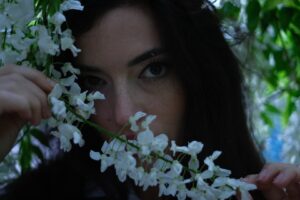
The second picture is of Diana, standing beneath a tree, holding spring blossoms to her face.
I have worked with models over the years partly for this reason: I love photographing people, but I want it to be an encounter, not an extraction. This photograph happened in a moment. Candid, but consensual. Spontaneous, but seen.
There is a kind of aliveness in it that I can feel even now.
When we feel lost in our practice, or in our lives, we go looking for answers in new techniques. A different workshop. A new lens. A framework for finding your artistic voice. These things aren’t wrong. But sometimes the acquisition of tools is a way of not sitting with the actual question.
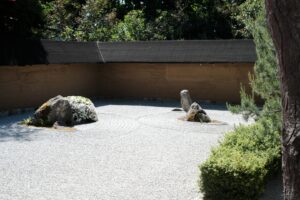
The Zen garden at Schwielowsee
On a bike ride out to Brandenburg, I stopped at a small Zen garden near Potsdam. I had been there before. I knew what it did to me.
A Zen garden doesn’t work through silence, there were other visitors takeing phots just like me. It works through arrangement. Through the deliberate placement of things in relation to each other, with a specific intention that intentionality enters you slowly, if you let it.
And in that slowing, something became clear: I know what I want my photography to be. I want it to function the way a Zen garden functions — as an arrangement that helps people stop, breathe, and return to themselves. Resource images. Little zines you can flip through when the world is too loud. Small visual anchors.
I had known this for a while. I had just been too busy accumulating other people’s ideas to hear my own.
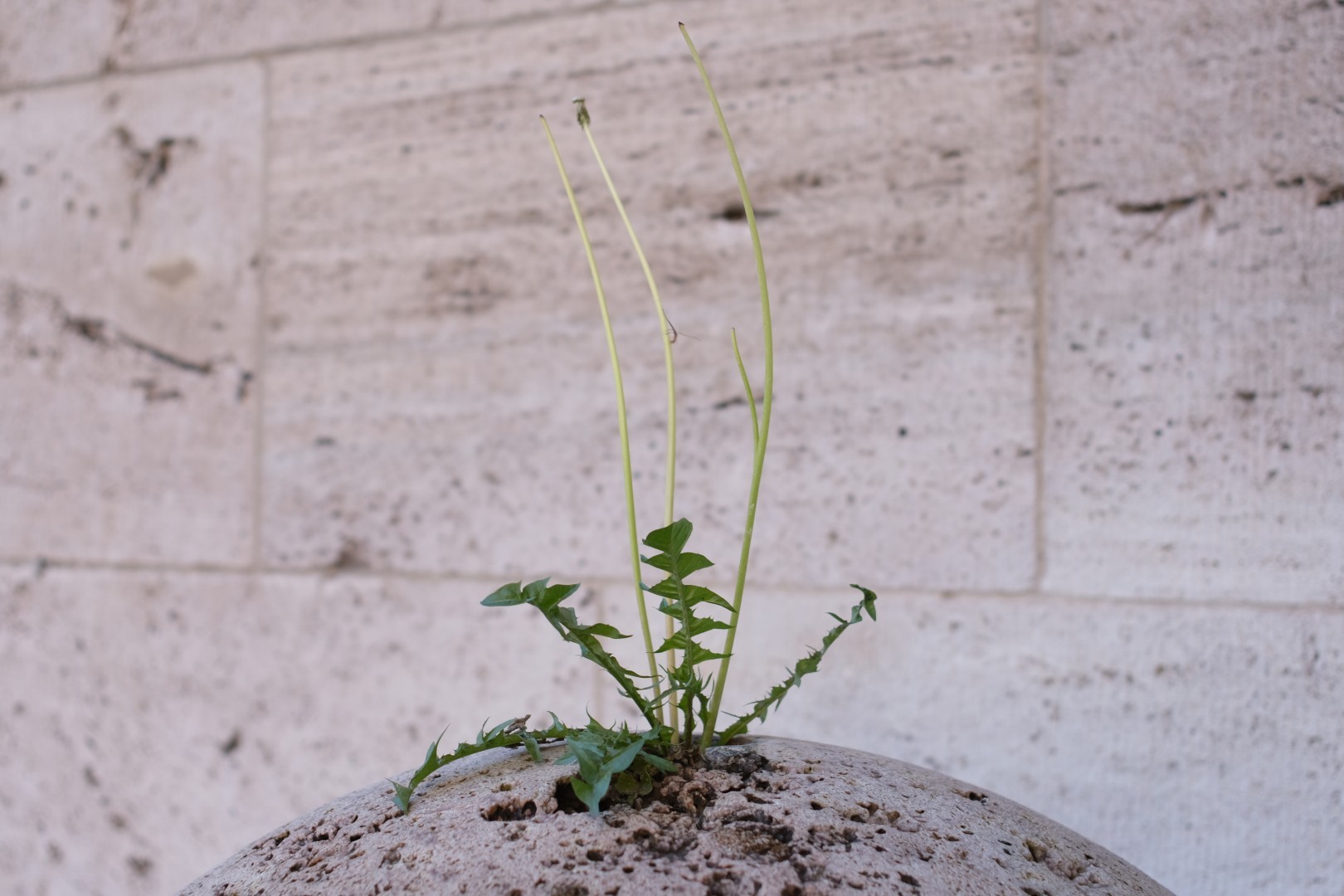
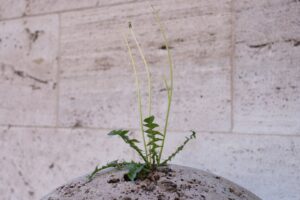
The plant in the granite
The last picture is the quietest.
A small plant, growing out of a granite boulder, a few streets from my home. I noticed the texture. The composition almost arranged itself.
All the experience of May had settled into this: a small, persistent thing, growing in the most ordinary place, close to home.
Choosing your photography — choosing anything that matters — is not a decision we make once. It is something we return to, over and over again, often through confusion, sometimes through exhaustion. The path back to clarity is rarely obvious. Sometimes it looks like a woman reading a book in the a rush-hour crowd.
But it is always closer than we think.
I share images, reflections, and small visual resources for people who use photography as a path — not to a better portfolio, but to a quieter mind. If this resonated, I’d love for you to walk alongside for a while.